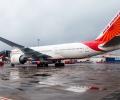
Amid mounting safety concerns and the cancellation of at least 66 flights that were to be operated with Boeing 787 Dreamliner aircraft, DGCA officials held a detailed review meeting with top Air India and Air India Express executives.
In modern aircraft, there are cockpit voice recorder and digital flight data recorder.
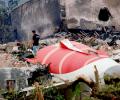
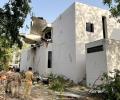
Both the CVRs and FDRs were recovered within a week after the accident. One was retrieved from a rooftop of the building at the crash site on June 13, and the other from the debris on June 16.
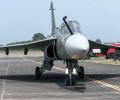
HAL executives said deliveries of the Tejas Mk1A to the IAF would begin within this year, but only after the successful completion of the weapons-firing trials currently underway.
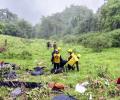
The recent helicopter crash near Kedarnath, in which seven lives were lost, has proven yet again that aviation regulatory authorities have not learnt lessons from similar air mishaps in the challenging Kedar valley and have done little to improve flying conditions.
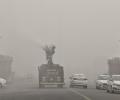
Delhi is preparing for its first artificial rain through cloud seeding to combat air pollution. A trial run was successful, and the first rainfall is expected on October 29 if weather conditions are favorable.

Civil Aviation Secretary Vumlunmang Vualnam on Thursday said the number of planes with domestic airlines will increase to 1,400 in the next five years as he highlighted the growth potential of the country's aviation space. Currently, the fleet is around 800 aircraft and leading carriers IndiGo and Air India have placed significant plane orders.
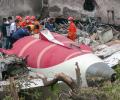
"Decoding of the black box is going to give in-depth insight into what happened moments before the plane crash," Civil Aviation Minister K Rammohan Naidu said at a briefing in the national capital.

This is the third enforcement action against a Tata Group airline in over a month.

The octogenarian was asked to wait due to heavy demand for wheelchair.
Aviation watchdog Directorate General of Civil Aviation (DGCA) on Tuesday said surveillance conducted at major airports revealed several defects in the aviation ecosystem, including multiple cases wherein the defects reappeared on aircraft and centre line marking faded on runway.

The three officials include a divisional vice president of the airline, as per the DGCA order.

A few weeks back, hundreds of flights had received bomb threat calls that later turned out to be hoaxes.

'The ministry may like to consider setting up an ombudsman similar to electricity ombudsman and insurance ombudsman, to ensure a time-bound resolution of consumer issues within the airline sector.'
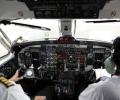
Ahead of two crucial audits, the Ministry of Civil Aviation (MoCA) has proposed to allow deputy director generals (DGs) and officers of Indian Air Force (IAF) to apply for the post of chief of India's aviation regulator. The current head of the Directorate General of Civil Aviation (DGCA), Arun Kumar, has been promoted as secretary and is expected to move out some time soon. DGCA has four Deputy DGs with experience in different fields of aviation.

Against the backdrop of a significant number of flights getting delayed and cancelled and passengers facing tough times, the regulator has come out with a set of Standard Operating Procedures (SOPs).
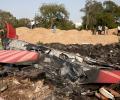
The US federal agency, National Transportation Safety Board (NTSB), responsible for the investigation of aviation accidents and significant transportation events in the country, on Friday (local time) issued a strong rebuke of recent media coverage made over the preliminary investigative report on the aftermath of the ill-fated Air India 171 crash that claimed 260 lives in Gujarat's Ahmedabad last month.
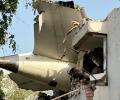
The specific reasons for the crash of the Boeing 787-8 aircraft flying from Ahmedabad to London Gatwick will be known only after the completion of the detailed probe by the Aircraft Accident Investigation Bureau.

The DGCA has issued four showcause notices to Air India over repeated violations of cabin crew deployment, training lapses, rest regulations, and operational oversight that compromise flight safety.

The fledgling Akasa Air has told the Delhi high court it is in a "state of crisis" following the "sudden and abrupt" resignation of over 40 pilots who left the airline without serving the mandatory notice period. The airline and its CEO Vinay Dube approached the high court with their petition on September 14, seeking a direction to the Directorate General of Civil Aviation (DGCA) to take coercive action against these pilots for their "irresponsible actions". The high court has fixed the plea for hearing on Friday.
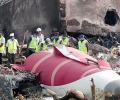
The DGCA directive called for a series of specific checks before each flight's departure from India, including inspection of fuel parameter monitoring systems, cabin air compressors, and electronic engine control units.

On July 25 and 26, the regulator's team carried out the surveillance of Air India in the areas of internal audit, accident prevention work and availability of required technical manpower.
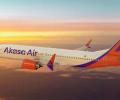
The Delhi high court on Wednesday agreed with the contention of Akasa Air that the DGCA is not completely barred from taking action against pilots who violate the terms of their employment agreements. However, the court did not grant any immediate relief to Akasa Air which sought direction to the DGCA and Union Ministry of Civil Aviation to take action against its pilots who have resigned without serving the notice period, saying it will first decide the issue of jurisdiction raised by the aviation sector regulator. Justice Manmeet Pritam Singh Arora said since the Directorate General of Aviation (DGCA) has contended it has no jurisdiction to consider a representation made by the airline against the defaulting pilots under the extant law as it was a contractual dispute, the court will have to first decide the issue of jurisdiction before passing any other direction.
When passengers book a flight, they could receive a secure 'journey pass' on their phone that stores all relevant travel information including passport data, seat assignment.
'CORSIA has set impossible targets. It tries to limit countries to the emission levels of the number of aircraft that they had in 2020. That has to be opposed.'
'...rectification has to happen then and there, and that takes additional time.'

A preliminary investigation into the Air India Flight 171 crash in Ahmedabad reveals that both fuel switches were cut off before the crash, followed by pilot confusion. The report also indicates that fuel samples were satisfactory and no immediate action is recommended for Boeing 787-8 operators.
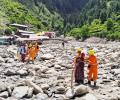
Authorities continue evacuating stranded pilgrims from areas around Dharali village in Uttarkashi, focusing on air rescue and relief operations due to damaged roads. Chief Minister Pushkar Singh Dhami is overseeing the efforts, with central government support.
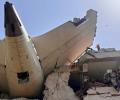
The DGCA has issued multiple fines and warnings to Air India over the past three years, flagging serious concerns in flight operations, cockpit discipline, and internal accountability.
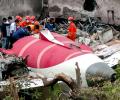
'... when the process isn't transparent, people will naturally raise questions. 'The AAIB's own press release says they had the black boxes by June 16.' 'Why wasn't decoding initiated until the 24th? What were they waiting for?'

The safety and security of citizens is primary for the government, he said.
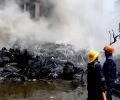
'This (crash) is one of those times where there is no concrete explanation yet for what happened. I think that adds to my parents' worry.'
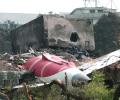
India's last three major commercial aviation accidents --Patna (2000), Mangaluru (2010), and Kozhikode (2020) -- could offer critical safety lessons for the ongoing investigation.

Seeking full utilisation of the Indian airspace, civil aviation authorities are in the process of training pilots and ATC personnel and introducing advanced technology to gradually reduce air distnce between two aircraft from 50 nautical miles to 15.

Aviation is a juicy target. It's a 24x7 industry, which cannot afford delays or loss of customer credibility.

'In multi-pilot operations, no critical switch can be moved without the other pilot's consent.'

In November, airlines resorted to raising spot fares by up to 300 per cent on various routes.
In an advisory, DGCA said there are provisions under the civil aviation requirement for action to be taken by the airline to deal with unruly passengers.
According to CAPA, partial abolition of the 5/20 rule was a serious compromise.
Indian civil aviation norms don't apply to foreign aviation companies, experts said.
 © 2026 Rediff.com - Advertise with us - Disclaimer - Privacy Policy - Sitemap - Feedback - About us - Terms of use - Grievances